Coffee, Decoded #02
May 25, 2026 (Updated on May 26, 2026)
Why Cheap Coffee Tastes Like Cheap Coffee (It's Not the Roast — It's the Mountain)
Quick question.
Why does cheap coffee taste flat?
Most people blame the roast. Or the brand. Or the grind.
It's none of those things.
It's the mountain. Or the lack of one.
Here's what nobody tells you when you walk down the coffee aisle.
There are two main kinds of coffee in the world. Arabica and robusta.
And the only thing that decides which one grows where is altitude.
That's it. That's the whole story. Everything else — the flavor, the caffeine, the price, the quality — flows from that one fact.
Let me show you what I mean.
Down low, where it's hot, robusta rules.
It has to.
Down there, bugs are everywhere. Pests. Disease. Heat. Humidity. A coffee plant at low altitude is fighting for its life every single day.
So the plant evolved a weapon.
Caffeine.
Caffeine is poison to insects. It's the plant's natural pesticide. The more caffeine the plant produces, the more it can fight off the bugs trying to eat it.
That's why robusta has almost twice the caffeine of arabica.
Not for your energy.
For the plant's armor.
Robusta beans clock in around 2.2 to 2.7% caffeine. Arabica sits at 1.2 to 1.5%.
So when you buy that cheap can of grocery-store coffee and it kicks you in the teeth — that's not "stronger" coffee. That's a plant that had to fight bugs to stay alive.
Robusta is the coffee in gas stations. In instant coffee. In the cheap blends nobody talks about on the bag.
It tastes harsh because it was built to survive.
Not to taste good.
Now go up the mountain.
Everything changes.
The temperature drops. The air gets thin. The bugs disappear.
At 4,000 feet, most pests can't survive. At 5,000 feet, even fewer. Up there, the plant can finally stop fighting.
That's where arabica lives.
And here's the magic.
When the plant doesn't have to spend energy making caffeine to fight bugs, it puts that energy somewhere else.
Flavor.
But altitude does something else too.
It's cold up there. Cold nights. Warm days. A massive swing between the two.
That temperature swing stresses the plant out. Stresses it hard.
And stress slows it down.
Way down.
A robusta cherry can be ripe in 6 months.
An arabica cherry takes 9 to 11 months.
Three extra months on the branch. Three extra months pulling nutrients out of the soil. Three extra months building sugar, building acid, building oil, building every flavor compound that makes coffee taste alive.
By the time we pick it, that bean is dense. Hard. Packed.
You can actually tell a high-altitude bean by looking at it. The bean is harder. Heavier. The little crease running down the middle is tighter. The whole bean is just… more.
That's what slow growth does.
That's what altitude does.
That's why high-altitude arabica tastes the way it does.
Bright. Sweet. Complex. Layered.
Alive.
Here's where it gets personal.
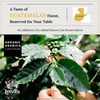
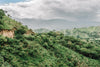
Our farms sit at 4,500 feet in the Guatemalan highlands.
The slopes are steep. Too steep for machines. The mornings are cold. The picking is slow. We do it by hand, cherry by cherry, only when each one is ripe.
It's hard. That's the point.
Hard ground makes hard beans. Hard beans make real coffee.
This is the coffee my father grew up planting. Same mountain. Same soil. Same family. Three generations now.
The coffee industry kept our village poor for most of that time. Big buyers paid pennies for what we grew. The flavor stayed on the mountain. The money never made it back.
We changed that.
Now we own the whole chain. We farm it. We roast it. We ship it. And 10% of every bag goes back to the village it came from — education for the kids, clean water, homes.
The mountain gave us flavor.
We're giving the mountain something back.
So next time someone tells you all coffee is basically the same, ask them one question.
What altitude did it grow at?
If they don't know, you already have your answer.
Cheap coffee tastes cheap because it was never trying to taste good.
It was trying to survive.
Ours is different. Because the mountain is different. Because we are different.
If you've been drinking the flat stuff your whole life, I want you to taste what altitude actually does.
Not every roast is right for every drinker. Some people want bright and fruity. Some want deep and chocolaty. Some want the everyday cup that just works.
We built a 60-second quiz to match you to the right one.
Take the quiz → Find your roast
Taste it. If it speaks to you, we'll talk.
— Geovanni Leiva
Con orgullo, La Familia Leiva
P.S. 10% of every bag we sell sends a kid in our village to school. The mountain fed my family for three generations. Now we're feeding it back. Más que café.